So I was flicking through the Grey's website for an agency visit tomorrow, and was utterly amazed by some of its fantastic works...
and as I thought I'd share some here as well, these are some of my favorite works, all developed by the different agencies from the Grey worldwide.
And of course some amazing ones from our proud Australian agency:
yeh, it's 2.47 in the morning now, and I'm off to bed.
Will put some more responsible comments / credits on tomorrow
but for now, bonne nuit, Melbourne.
J.

Tuesday, August 31, 2010

Tuesday, August 17, 2010
Chanel No. 5 and the haute couture: the shifting dynamic of brand advertising

Chanel No. 5 Ad (1960's)
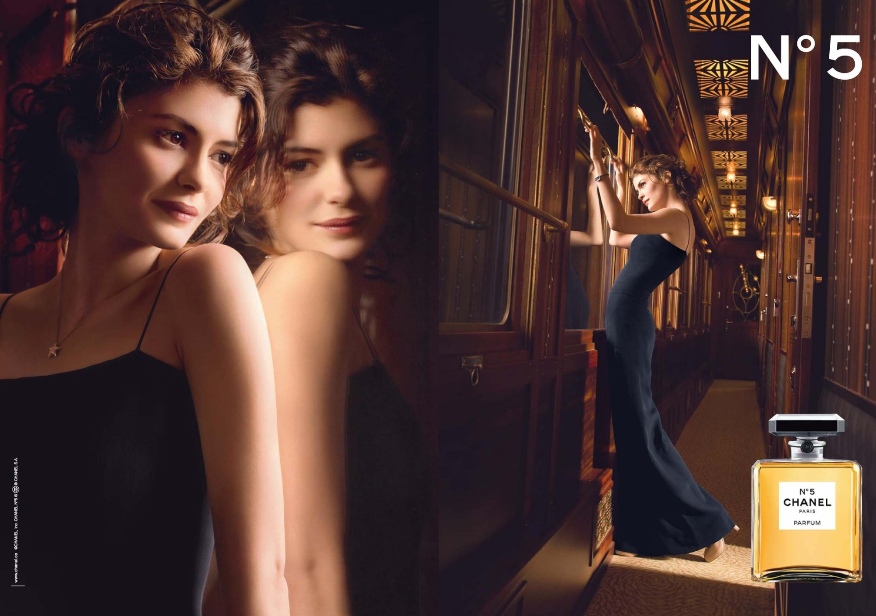
Chanel No.5 Ad campaign(2009)
To talk about the evolution of brand advertising dynamic, I always think that the haute couture speaks its best in representing this ever-changing environment because that is a typical world where the name of the brand is more important than what's in it. Simply look at the two Chanal No.5 ads above, we can see how the way a high-end brand (or on a larger scale, most brands) changes its way of advertising in a short period of 50 years:
1. A shift in target market positioning:
From the 1960s tagline "Every woman alive loves Chanel No. 5", to the 2009 campaign that targets more directly at the high social economic consumers, we can see how brands hacve become more and more cautious in selecting the right target market instead of doing those one-fits-all advertising campaigns. Mark Ritson, the author of Why are brand positionings made so complex?, suggests that if positioning are successful, it will ultimately "drive the company's behaviour to such a degree that it will appear in customer research as the things customers notice about that company." That way customers will then be able to identify themselves with the brand's characteristic (which in this case is the celebration of woman individual expression, beauty and luxury), and furthermore develop likelihood for it, if found any connection. Especially in an information age cluttered with marketing messages, if a brand like Chanel isn't able to set itself apart from the generic "all women" brand, it is more than likely that the halo of its glory will finally fade away.
2. The celebration of new media:
As for the media used, when the 1960s ad uses print due to the technology limitation of the time, the advance of the new media allows the 2009 campaign with a whole new range of possibilities. Besides the print ad, there is also a consistant TV commerical and a 2 minute short film developed to be placed in retail and its online promotion. This shows how brand advertisers in the digital age has the advantage to utilise more than one kind of media, maximising the marketing effectiveness.
2009 Chanel No 5: train de nuit
Another interesting thing I've noticed is the shifting of female role in advertising through this 50 years.
Although Chanel has always been a brand that celebrates female independency, we can still see the 60's ad basing its idea of 'attractiveness' on the appreciation of the male gender towards female. Females are positioned as an object, and by seeing the model in the print ad looking straight at the audience we can tell that she's aware of the gaze of appreciation, or even enjoying the attention. In other words, the consumer insight established by the advertiser would probably be as simple and shallow as: "all women who feel attractive when guys flock towards them." On the other hand, when the social dynamic of female gender continuously grow stronger and more independent, today brand advertisers tend to target female's independent success. The perception of beauty shifts from being appreciated by the opposite sex to self-appreciation, as portrayed in the 09 campaign. Also the model in the ad no longer cautiously stares at the audience. Instead, she seems to be enjoying her own presence regardless of others' opinions.
References:

Ritson, M. (2004). Why are brand positionings made so complex?. Marketing (00253650), 21. Retrieved from Business Source Premier database.

Tom Denari from Advertising Age
Has Your Advertising Become a Vuvuzela Blowing in the Night?
Credits:
Both advertising campaigns are created in-house. However the 2009 video campaign is directed by Jean-Pierre Jeunet, director of Amélie. (Audrey Tautou also starred as the main character in the movie.)
-----------------------------------------------------------------------------------------------------------------------------------
by the way, this is the second time where Chanel has played with the cinematic idea in conjunction with its famous No. 5 fragrance. The first campaign was released in 2004, with actress Nicole Kidman and Rodrigo Santoro in a Baz Luhrmann-directed/Mandy Walker-filmed multi-million dollar commercial entitled No. 5 The Film
J.
1. A shift in target market positioning:
From the 1960s tagline "Every woman alive loves Chanel No. 5", to the 2009 campaign that targets more directly at the high social economic consumers, we can see how brands hacve become more and more cautious in selecting the right target market instead of doing those one-fits-all advertising campaigns. Mark Ritson, the author of Why are brand positionings made so complex?, suggests that if positioning are successful, it will ultimately "drive the company's behaviour to such a degree that it will appear in customer research as the things customers notice about that company." That way customers will then be able to identify themselves with the brand's characteristic (which in this case is the celebration of woman individual expression, beauty and luxury), and furthermore develop likelihood for it, if found any connection. Especially in an information age cluttered with marketing messages, if a brand like Chanel isn't able to set itself apart from the generic "all women" brand, it is more than likely that the halo of its glory will finally fade away.
2. The celebration of new media:
As for the media used, when the 1960s ad uses print due to the technology limitation of the time, the advance of the new media allows the 2009 campaign with a whole new range of possibilities. Besides the print ad, there is also a consistant TV commerical and a 2 minute short film developed to be placed in retail and its online promotion. This shows how brand advertisers in the digital age has the advantage to utilise more than one kind of media, maximising the marketing effectiveness.
2009 Chanel No 5: train de nuit
Another interesting thing I've noticed is the shifting of female role in advertising through this 50 years.
Although Chanel has always been a brand that celebrates female independency, we can still see the 60's ad basing its idea of 'attractiveness' on the appreciation of the male gender towards female. Females are positioned as an object, and by seeing the model in the print ad looking straight at the audience we can tell that she's aware of the gaze of appreciation, or even enjoying the attention. In other words, the consumer insight established by the advertiser would probably be as simple and shallow as: "all women who feel attractive when guys flock towards them." On the other hand, when the social dynamic of female gender continuously grow stronger and more independent, today brand advertisers tend to target female's independent success. The perception of beauty shifts from being appreciated by the opposite sex to self-appreciation, as portrayed in the 09 campaign. Also the model in the ad no longer cautiously stares at the audience. Instead, she seems to be enjoying her own presence regardless of others' opinions.
References:

Ritson, M. (2004). Why are brand positionings made so complex?. Marketing (00253650), 21. Retrieved from Business Source Premier database.

Tom Denari from Advertising Age
Has Your Advertising Become a Vuvuzela Blowing in the Night?
Credits:
Both advertising campaigns are created in-house. However the 2009 video campaign is directed by Jean-Pierre Jeunet, director of Amélie. (Audrey Tautou also starred as the main character in the movie.)
-----------------------------------------------------------------------------------------------------------------------------------
by the way, this is the second time where Chanel has played with the cinematic idea in conjunction with its famous No. 5 fragrance. The first campaign was released in 2004, with actress Nicole Kidman and Rodrigo Santoro in a Baz Luhrmann-directed/Mandy Walker-filmed multi-million dollar commercial entitled No. 5 The Film
2004 Chanel No 5: the film
J.
Tuesday, August 10, 2010
controversial advertising - has PETA gone too far?

PETA always has its reputation in its controversial advertising campaigns that feature nude or semi-nude celebrities and shockingly abused women images in order to educate the public about animal rights.
Some famous campaigns include its "I'd rather go naked than wear fur" print ad series


 and the recent sexy Vegetarian Superbowl TVC that is undoubtedly banned...
The objective of all these rather controversial advertisements are clear in its own way (regardless of how they're ACTUALLY percieved by the public on a larger scale), that is to protect animal rights, catching audience's attention on the issue which PETA cares about, for example fur wearing and carnivorism alike. And as cliche as the purpose can be, PETA chose to deliver their message in the most outrageous way, with its bold and graphic execution throughout female nudity and abusive scenes (either in print, broadcast, or experience) appealing to the (male) audience's eyes.
hmmm, thoughts?
I mean, I get it. Sex sells. And PETA surely well-understand the power of female bodies. In fact, we all have to admit that PETA has a rather strong marketing ability as they really know the golden rule of engaging different types of audience differently. Simply check this out: Other than the mainstream PETA website, there are also PETA2 which targets young adults, PETA kids for children and PETA prime for the old folks. And they do raise more than a few eyebrows everytime they have something new coming out.
However as a critical thinker, there are still a few issues that I identify with amongst these outrageous PETA campaigns. and the main concern lies in the ratio of respect given to women verses animals.
We've seen quite a bit of commentators online having the same concern. According to homepage DAILY, an online student newspaper, "these ads get your attention but they only do so because of the sexualization and not the message. Showing someone a bare ass and a nice set of breasts does not make them into a vegetarian. PETA has increasingly shown no conscience when it comes to respect for women, or the roles that they place us in."

(Source: Pitch News)


(Source: NowPublic)
The way that PETA utilises female nudity to get attention has the tendency of degrading women's identity and making them a passive sex object or even worse. However my question to them would be, in a marketing communication perspective, if their target audience is the entire human world, then would this kind of advertising - despite its effectiveness - be suitable for all ages in the first place?
Some may argue that as PETA targets their market so carefully, there must be some ads suitable for your young kids at home.
Ironically, according to The Ten Most Controvesial Ads of 2007 reported by Stephen Whiteside, PETA's "Feeding kids meat is child abuse" ad, though not upheld, had recieved 68 complaints from the consumers by ASA as being offensive, misleading and irresponsible.

(Source: WARC - The Ten Most Controvesial Ads of 2007)
And now it has just become harder for PETA to counter all the criticisms flooding toward its politically-incorrect advertising method. Well, way to go for them.
Here's another interesting article I've found that says something about PETA's advertising stunt, have a read.
Eco Salon - When Good Causes Go Wrong: 7 Utterly Outrageous PETA Stunts
Also, here's some anti-PETA ads consumer-generated content, just for a laugh.

And finally, to balance off the angle of the article, PETA's response to the numerous criticisms toward its disgrading of females beings is that they do not base the ad campaigns on sexism but simply on what that catches the attention of the audience.
Alongside with it I have another article for you, this time written by PETA in reponse to the rejection of NBC to its sexy SuperBowl ad, which was shown previously in the post.
NBC's Sexually-Explicit Super Bowl Ad Rejection Makes Us Blush
Ha! Good call, PETA.it seems like the war between the wild and the civilised is still on...
J.
Sunday, August 8, 2010
a fresh start
so I started this blog because of my university subject- as a part of my advertising management folio. Therefore I'm not foreseeing it to be entertaining... However as nerdy as it may sound, I'm actually pretty excited to see this happening as I've always had an interest in advertising, as well as rambling about my thoughts.
Anywho, to start this off, as this blog is going to be all about advertising - the good, the bad, the ugly and everything in between - Here's one of my recent favorite: A series of TVC of the new Sony Bravia TV.
Well, surely Sony is a master in stirring up its customer's heart.
This is a successful series where emotional and rational appeals in advertising are effectively used.
The two ads, while showing off BRAVIA's superb ability as an internet TV, they've also left an unforgettable impression in the audience's mind by reminding every adult their once-had childhood dream.
Reliving the moments hey? Who doesn't like being given another chance to dream again?
I shall rant no more.
More discussion on this ad please see:
The Inspiration Room-Sony Bravia Superstar and Rockstar
Credits (source: The Inspiration Room)
Anywho, to start this off, as this blog is going to be all about advertising - the good, the bad, the ugly and everything in between - Here's one of my recent favorite: A series of TVC of the new Sony Bravia TV.
New Sony commercial for the latest range of BRAVIA TVs - Superstar
New Sony commercial for the latest range of BRAVIA TVs - Rockstar
Well, surely Sony is a master in stirring up its customer's heart.
This is a successful series where emotional and rational appeals in advertising are effectively used.
The two ads, while showing off BRAVIA's superb ability as an internet TV, they've also left an unforgettable impression in the audience's mind by reminding every adult their once-had childhood dream.
Reliving the moments hey? Who doesn't like being given another chance to dream again?
I shall rant no more.
More discussion on this ad please see:
The Inspiration Room-Sony Bravia Superstar and Rockstar
Credits (source: The Inspiration Room)
The Superstar and Rockstar ads were developed at Anomaly, London, by creative director Mike Byrne,
Filming was shot by director Frank Budgen via Gorgeous Enterprises with producer Rupert Smythe, director of photography Ben Seresin.
Post production was done at Framestore, London. Editor was Paul Watts at The Quarry.
Music was recorded and mixed at Grand Central Studios, London. Music for Superstar is ‘Simple World’, by Jonathan Elias, Elias Arts.
J.
Subscribe to:
Comments (Atom)